
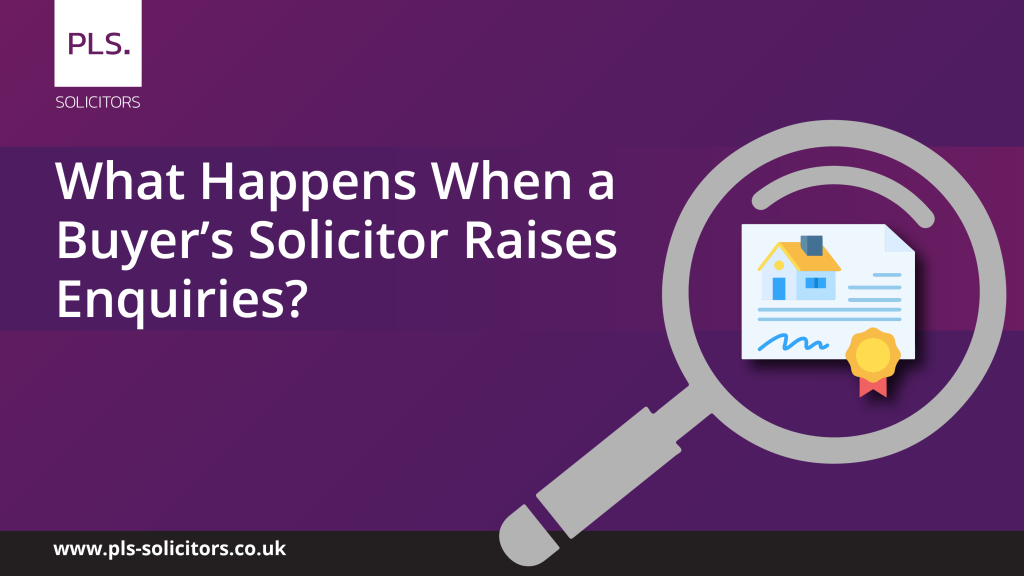

When selling a property, it is normal for the buyer’s solicitor to raise enquiries. These are questions they ask after reviewing the legal paperwork and property searches.
The aim is simple: to make sure the buyer fully understands what they are purchasing before they commit to the sale.
Although it can feel like a delay, this is a standard part of the conveyancing process in England and Wales.
What are Conveyancing Enquiries & why are enquiries raised?
Conveyancing enquiries are formal questions raised by the buyers solicitor to the seller’s solicitor.
They are usually raised after:
- The draft contract pack has been received
- Property searches have been reviewed
- The title documents have been checked
The buyer’s solicitor is acting to protect their client and their mortgage lender by checking that everything about the property is legally correct and as expected.
It helps you to confirm important details such as:
- Results from local authority or environmental searches
- Ownership of the property
- Boundaries and access rights
- Planning permission and building regulation approval
- Leasehold information (if applicable)
- Results from local authority or environmental searches
Property in the UK is sold under a principle called “buyer beware”, meaning it is the buyer’s responsibility to check everything before exchange of contracts.
Common Types of Enquiries
Most transactions involve a mix of standard and property-specific questions. Common examples include:
| Type of Enquiry | What is typically asked |
|---|---|
| Title and Legal ownership | Confirmation that the seller legally owns the property and has the right to sell it |
| Property searches | Clarification of anything flagged in searches, such as nearby planning applications or drainage issues. |
| Building work and alterations | Planning permission, building regulations approval, completion certificates or warranties for any extensions or changes. |
| Leasehold information | Service charges, ground rent, management company details, lease length, and terms (flats and leasehold houses). |
How Long Do Enquiries Take?
There is no fixed timescale for enquiries. Some are resolved within a few days, while others can take several weeks.
The length of time will depend on factors such as:
- Whether all the required documents are available
- How quickly third parties, such as local authorities or management companies, respond
- Whether further information is needed
- The complexity of the property transaction
Most property sales involve at least one or two rounds of enquiries before exchange of contracts, so this stage is a normal part of the conveyancing process.
What Happens After Enquiries are Raised?
Once enquiries are sent, the seller’s solicitor reviews them and usually asks the seller for answers or documents.

Can Enquiries Delay a Sale?
In some cases, enquiries can slow down a property transaction, particularly if important information is difficult to obtain.
If you are selling a property, you can help keep the process moving by:
- Responding promptly to requests from your solicitor
- Providing documents as soon as possible
- Ensuring any information you supply is accurate
- Locating important paperwork, such as warranties or certificates, early in the process
Being organised and proactive can help reduce delays and make the conveyancing process run more smoothly.
Conclusion
When a buyer’s solicitor raises enquiries, it simply means they are carrying out detailed legal checks on the property.
While it can feel like extra back-and-forth, enquiries are a normal and important part of the conveyancing process. They help ensure that both buyer and seller have full clarity before contracts are exchanged.
By answering enquiries promptly and accurately, most transactions can move forward without unnecessary delay.
Get in touch with PLS Solicitors today to experience seamless service and expert legal advice for your property sale!